




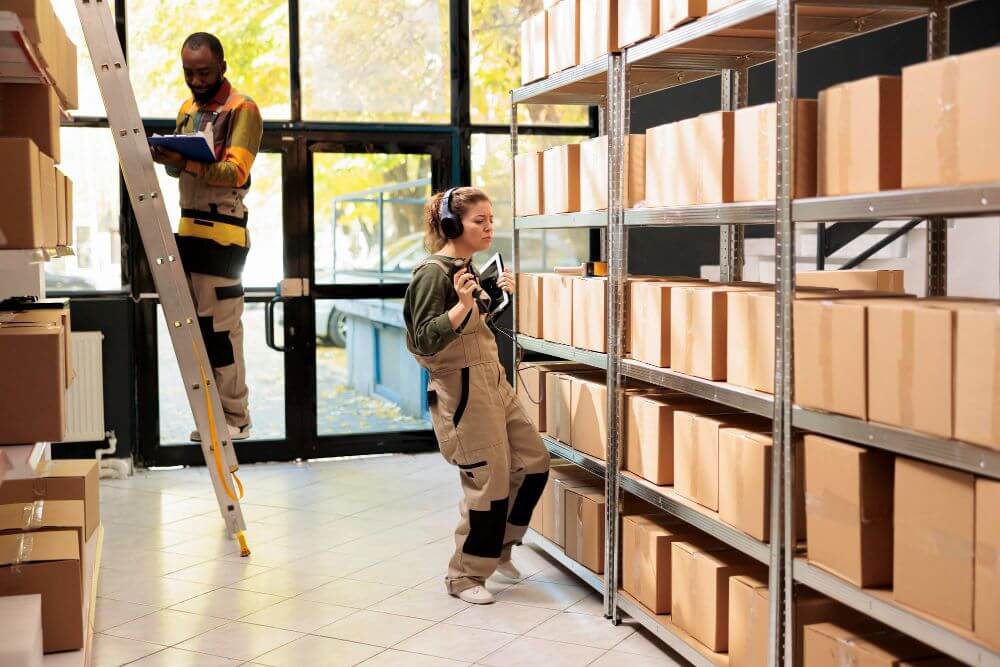

Efficient warehouse management is critical for businesses seeking to reduce operational costs, enhance productivity, and maintain seamless supply chain performance. As Australia’s logistics, distribution, and eCommerce sectors continue to grow, making the most of available warehouse space has become a key business priority.
Investing in industrial warehouse shelving provides a practical and scalable way to improve storage efficiency and maximise available space. By utilising vertical storage, improving inventory organisation, and increasing accessibility, modern shelving solutions help businesses expand their storage capacity without the need for costly facility expansions. The result is a more organised, efficient, and productive warehouse environment capable of supporting long-term business growth.
Utilise Vertical Storage Space
One of the most effective ways to maximise warehouse space is by taking advantage of vertical height. Installing tall shelving systems allows businesses to store more inventory within the same floor area.
This approach is particularly beneficial in warehouses with high ceilings, where unused vertical space can be converted into valuable storage capacity.
Implement Adjustable Shelving Systems
Adjustable shelving provides flexibility to accommodate different product sizes and changing inventory needs. By modifying shelf heights and configurations, warehouses can optimise space usage and reduce wasted gaps.
This adaptability is especially useful for businesses with seasonal or diverse product ranges.
Use Narrow Aisle Racking Systems
Narrow aisle shelving systems are designed to reduce the width of aisles between racks, allowing for more storage rows within the same warehouse footprint.
While this requires specialised equipment for access, it significantly increases storage density and efficiency.



Adopt Mobile Shelving Units
Mobile shelving systems are mounted on tracks and can be compacted together when not in use. This eliminates the need for multiple fixed aisles, freeing up additional storage space.
These systems are ideal for warehouses with high-value or low-turnover inventory.
Categorise Inventory for Better Organisation
Organising inventory systematically improves space utilisation and reduces wasted time searching for products. Grouping similar items together ensures that shelving space is used logically and efficiently.
Clear categorisation also improves picking accuracy and operational speed.
Use Pallet Racking for Bulk Storage
Pallet racking systems are essential for warehouses dealing with large or heavy goods. These systems allow pallets to be stacked vertically and accessed easily using forklifts.
They are ideal for maximising space in industrial and distribution environments.
Implement FIFO Storage Systems
First-In, First-Out (FIFO) systems ensure older stock is accessed before newer stock. This method reduces product wastage and improves shelf turnover efficiency.
FIFO systems are commonly used in industries dealing with perishable or time-sensitive goods.
Optimise Shelving Layout Design
A well-planned warehouse layout is crucial for maximising space efficiency. Proper placement of shelving systems can improve workflow, reduce congestion, and enhance accessibility.
Key considerations include:
- Proximity to loading docks
- Frequency of item access
- Safety regulations
- Workflow direction
Incorporate Multi-Tier Shelving Systems
Multi-tier shelving allows warehouses to create multiple levels of storage within the same floor space. This effectively doubles or triples usable storage capacity without requiring expansion.
These systems are particularly effective for manual picking operations.
Regularly Review and Reorganise Storage Systems
Warehouse needs change over time, and regular reviews ensure shelving systems remain efficient. Periodic audits help identify underutilised space, outdated layouts, and opportunities for improvement.
Ongoing optimisation ensures long-term efficiency and adaptability.
Benefits of Smart Shelving Systems
Smart shelving systems offer numerous advantages for warehouse operations, including:
- Increased storage capacity
- Improved inventory organisation
- Faster picking and packing processes
- Reduced operational costs
- Enhanced workplace safety
These benefits contribute to a more productive and scalable warehouse environment.
Final Thoughts
Maximising warehouse space using smart shelving systems is essential for businesses seeking to improve efficiency and remain competitive in today’s logistics-driven economy. By implementing vertical storage solutions, adjustable racking, mobile systems, and strategic layout planning, warehouses can significantly increase capacity without expanding their physical footprint.
A well-designed shelving system not only improves storage efficiency but also enhances workflow, safety, and overall operational performance. For Australian businesses, investing in smart warehouse solutions is a practical step toward long-term growth and sustainability.