





Growth is exciting until the back office starts to feel the strain. More customers, more suppliers, more employees, and more locations usually mean one thing: more deliveries arriving at the front desk, warehouse, reception area, or mailroom every day.
For teams replacing spreadsheets and shared inboxes, Mailroom Management Software can support a smarter mailroom workflow by giving staff a faster way to log, notify, track, and release incoming deliveries.
At first, a small team can manage parcels manually. Someone signs for a package, writes the recipient’s name in a logbook, sends a message, and stores the item on a shelf. That process may work for ten deliveries a day. It becomes risky at fifty, frustrating at one hundred, and unsustainable when delivery volumes keep rising.
The challenge is not just volume. It is visibility. Growing businesses need to know what arrived, who received it, where it is stored, whether the recipient was notified, and when it was collected. Without a clear process, deliveries become a hidden source of delays, lost items, security concerns, and wasted staff time.
The goal is not simply to move parcels faster. It is to create a delivery process that remains accurate, secure, and predictable as the business grows.
Why Delivery Volumes Become Harder to Manage
Increasing delivery activity often happens gradually. A business hires more staff, expands departments, adds vendors, receives more samples, handles more returns, or opens additional locations. Each change adds pressure to the same delivery process.
Common issues include:
| Delivery Challenge | Business Impact | Operational Fix |
| Manual parcel logs | Hard to search, audit, or update | Digitize delivery records |
| Delayed recipient notifications | Parcels sit uncollected for days | Automate alerts |
| No proof of collection | Disputes over missing deliveries | Capture signatures or photo proof |
| Cluttered storage areas | Slower handovers and a higher risk of loss | Use clear parcel storage workflows |
| Multiple delivery points | Poor visibility across locations | Centralize tracking and reporting |
The bigger the business gets, the more important consistency becomes. A delivery process should not depend on one experienced staff member remembering where everything is. It should be simple enough for any trained employee to follow.



Start With a Clear Intake Process
Every efficient delivery operation begins at the point of arrival. When a courier drops off a parcel, staff should be able to log it quickly and accurately.
A strong intake process should capture the basics: recipient name, delivery date, courier, tracking number, parcel condition, storage location, and any notes. This information needs to be searchable, especially when a recipient asks, “Has my package arrived?”
Businesses that still rely on notebooks or spreadsheets often lose time because records are inconsistent. One person may write “J. Smith,” another may write “John S,” and another may forget to add the courier name. These small inconsistencies create larger problems when volumes increase.
A digital intake process makes the first step cleaner. Scanning labels, creating automatic records, and standardizing parcel details reduce the risk of human error.
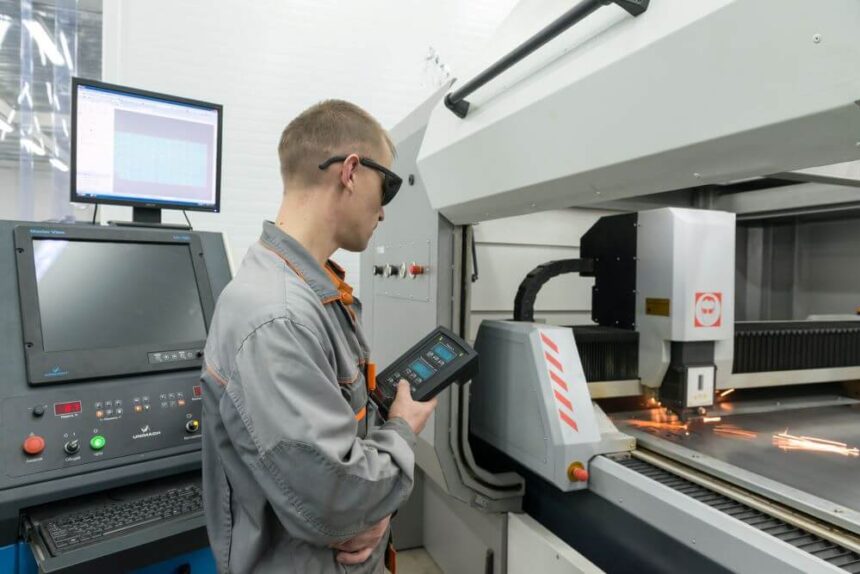
Reliable scanning at scale depends on more than a handheld reader. A machine vision camera mounted above the intake station reads labels at conveyor speed and captures a timestamped image of each parcel’s condition, which is what separates a system that catches 99% of incoming items from one that quietly drops one in twenty into a manual fallback queue.
Automate Recipient Notifications
One of the biggest bottlenecks in delivery handling is communication. Staff should not have to manually email, call, or message every recipient when a parcel arrives.
Automated notifications help solve this. Once a parcel is logged, the recipient can receive an alert with collection instructions. This speeds up pickup times and reduces the number of parcels sitting in storage.
It also improves the recipient experience. Employees, tenants, residents, or customers do not need to chase updates. They know when an item has arrived and where to collect it.
For growing businesses, this matters because notification volume rises as parcel volume increases. A process that takes one minute per parcel can quickly consume hours each week.
Automation is most valuable when it removes repetitive work without removing accountability.
Create a Secure Collection Workflow
Delivery management does not end when a parcel is logged. The handover is just as important.
Without proof of collection, it can be difficult to resolve disputes. A recipient may say they never received a package. A courier may confirm delivery to the building, but not the final handoff. Staff may remember handing over an item, but have no record to prove it.
A secure collection workflow should include:
| Collection Step | Why It Matters |
| Recipient identity check | Ensures the parcel goes to the right person |
| Signature or photo proof | Creates a reliable handover record |
| Timestamped collection | Shows exactly when the parcel left storage |
| Staff notes | Captures exceptions or special handling details |
These records are especially valuable for businesses handling confidential documents, electronics, medical supplies, legal materials, or high-value inventory.
Use Reporting to Spot Pressure Points
Many businesses only notice delivery problems when something goes wrong. A lost parcel, a crowded mailroom, or a frustrated employee becomes the signal that the process is under stress.
Reporting helps leaders act earlier.
Delivery data can show peak arrival times, average collection speed, courier patterns, counts of uncollected parcels, and team workload. This makes it easier to plan staffing, adjust storage space, and improve workflows.
For example, if most deliveries arrive between 10 a.m. and 1 p.m., managers can schedule coverage accordingly. If parcels are taking three days to be collected, notification rules may need improvement. If one location has significantly more delivery issues than another, the process may not be consistent across sites.
Good Mailroom Management is not only about handling today’s parcels. It is about using operational data to prepare for tomorrow’s volume.
Standardize Parcel Handling Across Teams
As businesses grow, deliveries may arrive at multiple places: reception, loading bays, mailrooms, warehouses, satellite offices, or coworking spaces. Without a shared process, every team may develop its own method.
That leads to confusion. A finance team might track deliveries in a spreadsheet. Facilities may use paper slips. Reception may rely on email. Warehouse staff may follow a separate process entirely.
Standardization helps create one version of the truth. Everyone should follow the same core steps: receive, log, notify, store, release, and archive.
For businesses managing higher delivery volumes, Parcel Management Software can help create scalable parcel workflows that reduce manual tracking while improving visibility across departments and locations.
Train Staff for Exceptions, Not Just Routine Deliveries
Most deliveries are simple. The parcel arrives, the recipient is notified, and the item is collected. The real test is how the business handles exceptions.
Examples include damaged parcels, missing recipient names, oversized items, urgent deliveries, restricted-access goods, returned items, and packages sent to former employees. A growing business needs clear rules for these situations.
Staff should know when to escalate an issue, where to store unusual items, how long to hold uncollected packages, and how to document exceptions. This prevents guesswork and protects the business from avoidable disputes.
A simple exception policy can make a large difference. It gives staff confidence and ensures recipients receive consistent service.
Plan Storage Before It Becomes a Problem
Storage is often overlooked until shelves are full. As volumes rise, parcels can quickly take over reception desks, hallways, cupboards, and shared workspaces.
An efficient storage setup should make parcels easy to find and safe to hold. Businesses can use zones, shelves, bins, barcodes, or labeled collection areas. The right setup depends on parcel volume, parcel size, available space, and security needs.
The key is to avoid random placement. If staff have to search several rooms to find a package, the process is already costing too much time.
Build a Process That Can Scale
Growing businesses do not need a complicated delivery operation. They need a repeatable one.
The most efficient delivery workflows share a few traits: fast intake, automated communication, secure handover, searchable records, clear storage, and useful reporting. These fundamentals help teams manage more deliveries without adding unnecessary admin work.
As volume increases, the risks of manual processes become harder to ignore. Lost parcels, delayed collections, inconsistent records, and crowded storage areas all affect productivity. With the right systems and habits in place, delivery management can become a smooth back-office function rather than a daily source of disruption.
A scalable approach allows businesses to keep moving, even as parcels, people, and locations multiply.