




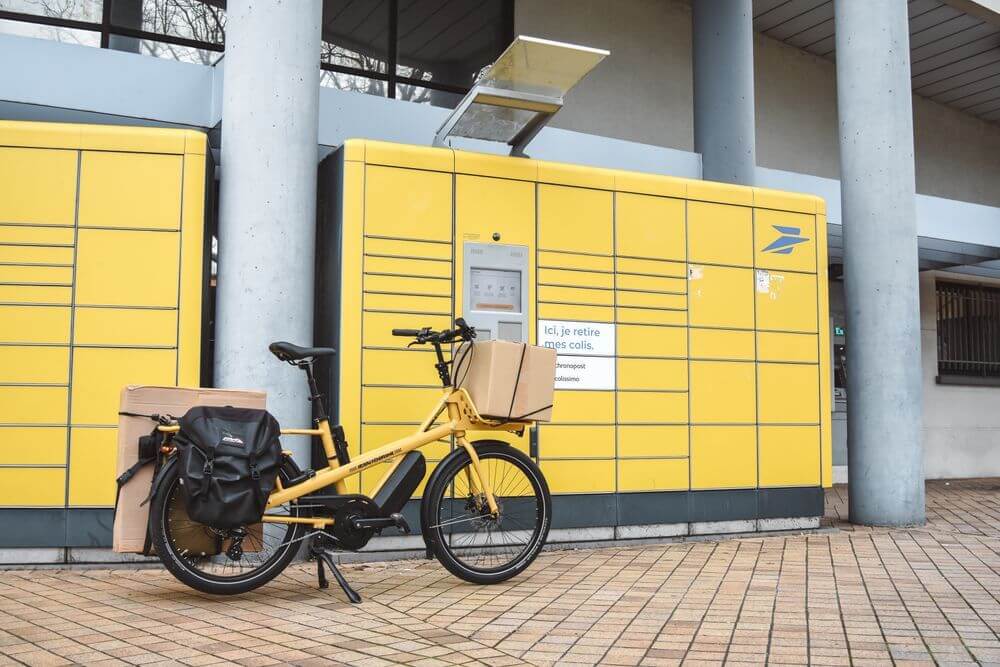

Walk past the loading dock of a lot of small businesses these days and you’ll notice something that wasn’t there a few years ago: an electric bike, propped up and plugged in, quietly doing work that used to require a van or a car. It isn’t a fad. For a growing range of businesses, e-bikes have turned into a genuinely practical tool — cheaper to run than a vehicle, quicker through congested streets, and far less hassle to park or store.
What gets less attention is the smarter version of the move. You don’t necessarily need to buy purpose-built electric bikes at all. For many businesses, the better play is to electrify the bikes they already own, or pick up inexpensive used ones and convert them, for a fraction of the cost of going to a showroom. Here’s where e-bikes actually pull their weight in a business, and why conversion so often beats buying new.
Where e-bikes actually earn their keep
The business case isn’t universal, but in the right setting it’s strong, and it tends to show up in a few specific places.
Last-mile delivery is the obvious one. For a restaurant, a florist, a pharmacy, or any business moving small loads across a city, an e-bike beats a car or van on the metrics that matter: it slips through traffic that gridlocks a vehicle, it parks almost anywhere, it costs next to nothing per mile, and it never circles the block hunting for somewhere to stop. In a dense urban core, a rider on an e-bike frequently makes more drops per hour than a driver, simply because they aren’t fighting the same constraints all day.
Then there’s commuting. Businesses that want to cut parking demand, back up a sustainability commitment, or simply give staff a cheaper way to get to work are increasingly helping employees onto e-bikes. A commute that’s a little too far to cycle comfortably becomes very doable with assist, which widens the pool of people willing to leave the car at home. And for larger sites — campuses, warehouses, sprawling facilities — e-bikes are a quick, cheap way to move people and small loads around without firing up a vehicle for every short hop across the property. None of this requires a fleet of branded cargo bikes. It just requires ordinary bikes that go.
Why conversion beats buying new
Here’s where the economics get interesting, because the instinct — go and buy electric bikes — is usually the expensive way to do it.
A purpose-built electric bike carries a significant premium over a regular bike, and for a business buying several, that premium multiplies fast. A conversion takes a different route: you start with a normal bike, whether one you already own or an inexpensive used one, and add the electric drive to it. A quality e-bike conversion kit turns a bike you already trust into an electric one for a fraction of what a comparable factory e-bike would cost, which changes the math entirely when you’re equipping more than one rider.
The flexibility is the underrated part. Conversion lets you electrify the specific bikes that suit your work — a sturdy cargo bike, a nimble city bike, whatever actually fits the job — rather than choosing from whatever a manufacturer happens to offer that season. It lets you keep using equipment you’ve already invested in. And it spreads neatly across a small fleet, since you can convert bikes gradually as budget allows instead of committing to one big purchase up front. For a business keeping a close eye on its capital, that incremental, reuse-what-you-have approach is often exactly the right shape.



Matching the power to the job
Not all conversions are equal, and the single most important spec to get right is power, usually expressed in watts. Under-power the bike and it struggles with the load; over-power it and you’ve paid for capability you can’t legally or practically use. Matching wattage to the actual job is the whole skill, and it’s where a little thought saves a lot of money.
For flat-city commuting and light delivery, a modest kit is plenty — it adds smooth assist without drama and sips battery. The picture changes when the work gets demanding. Hauling heavy cargo, climbing serious hills, or moving substantial loads all day calls for considerably more muscle, and that’s where a higher-output build such as a 2000w ebike kit enters the conversation — the kind of power that shrugs off a steep grade with a loaded trailer behind it instead of wheezing to a halt halfway up.
One crucial caveat belongs right here, though, because it trips people up constantly. Road-legal e-bikes are subject to power and speed limits that vary widely by location, and many places cap street-legal e-bikes well below the output of the most powerful kits. High-wattage builds are frequently intended for off-road use, private sites, or heavy cargo applications where that power is actually permitted, rather than for unrestricted riding on public roads. Before you settle on a power level, check the e-bike classes and limits where you’ll genuinely be riding, and match the build to both the job and the law. Getting that right at the start saves a great deal of trouble later.
Two other choices shape how a conversion rides. The first is motor type: a hub motor, built into a wheel, is simpler, cheaper, and quieter, and it’s plenty for most commuting and delivery duty, while a mid-drive motor that powers through the bike’s own gears handles steep, sustained climbing and heavy loads more efficiently. The second is the battery, which is really the range question wearing a disguise — capacity is measured in watt-hours, and more watt-hours means more miles between charges. Size the battery to the longest realistic shift the bike will actually do, with a margin on top, rather than guessing, because nothing kills enthusiasm for an e-bike faster than running flat halfway through the day with deliveries still pending.
The numbers that make it work
Strip away the enthusiasm and the business case for e-bikes ultimately rests on running cost — and the running cost is genuinely, almost comically low.
Charging an e-bike battery costs pennies, not dollars, a rounding error next to fuel for a car or van. There’s no insurance premium on the scale of a vehicle, no fuel bill that lurches around with the market, and far less to go wrong mechanically than on anything with an engine and a transmission. Maintenance is mostly ordinary bike maintenance plus occasional attention to the battery and motor. Set the modest upfront cost of a conversion against the per-mile cost of the car or van trips it replaces, and for the right use case the payback arrives quickly and then simply keeps paying, month after month.
It helps to think in replacement terms rather than absolute cost. The right comparison isn’t “what does an e-bike cost,” but “what does each car or van trip it replaces cost” — in fuel, in parking, in the rider’s time lost to traffic, in wear on a vehicle. Once you price the trips you’re actually displacing rather than the bike in isolation, conversions that looked like a nice-to-have often turn out to be straightforwardly cheaper than carrying on the way you were.
The softer returns matter too. Riders often genuinely prefer it — beating traffic and skipping the parking hunt is its own daily reward — and there’s a real reputational upside for a business visibly choosing a cleaner, quieter way to move around its own community. None of that shows up on the first invoice, but it compounds in goodwill over time.
What to sort out before you roll
A few practical things separate a smooth rollout from a regret, and they’re all worth handling before the first ride rather than after the first problem.
Start with the law, as above: confirm the e-bike classes, power limits, and where you’re permitted to ride locally, then build to comply. Sort out insurance and liability if employees will be riding for work, because that’s a question you want answered in advance, not in the aftermath of an incident. Don’t skimp on the safety basics — helmets, lights, and a little training for anyone not used to riding in traffic go a long way. Treat the battery sensibly: buy quality, charge it following the manufacturer’s guidance, and never leave cheap, unbranded cells charging unattended, because battery safety is the one corner you genuinely cannot afford to cut. And think about storage and theft, since an e-bike is an attractive target and needs somewhere secure to live overnight.
It’s also worth a quick word with whoever handles the bikes day to day, because the people doing the riding spot problems first — a battery charging slower than it used to, a connector working loose, a tire that keeps going soft. A two-minute habit of flagging small issues keeps them from becoming a breakdown mid-route, which on a delivery bike is the difference between a minor fix in the morning and a missed afternoon of orders.
None of these is a dealbreaker. They’re simply the homework that turns a good idea into a working system instead of an expensive lesson learned the hard way.
The bottom line
E-bikes have quietly become a serious tool for the businesses that fit them, and the smartest way in is rarely the showroom. Work out where in your operation a bike genuinely beats a vehicle — delivery, commuting, moving around a big site — and the use case usually reveals itself fast. Convert rather than buy, so you’re spending a fraction of the cost and reusing equipment you already trust. Match the power honestly to the work and to the law. And do the unglamorous prep on legality, safety, and batteries before you roll out.
Do that, and you end up with something genuinely rare: a cheaper, faster, cleaner way to move things around, built largely on bikes you already had. And because you’ve reused what you owned rather than buying new, the win lands on the budget and the footprint at the same time — a combination that doesn’t come along all that often. The business case was sitting in the bike shed the whole time. Most companies just never thought to look there.