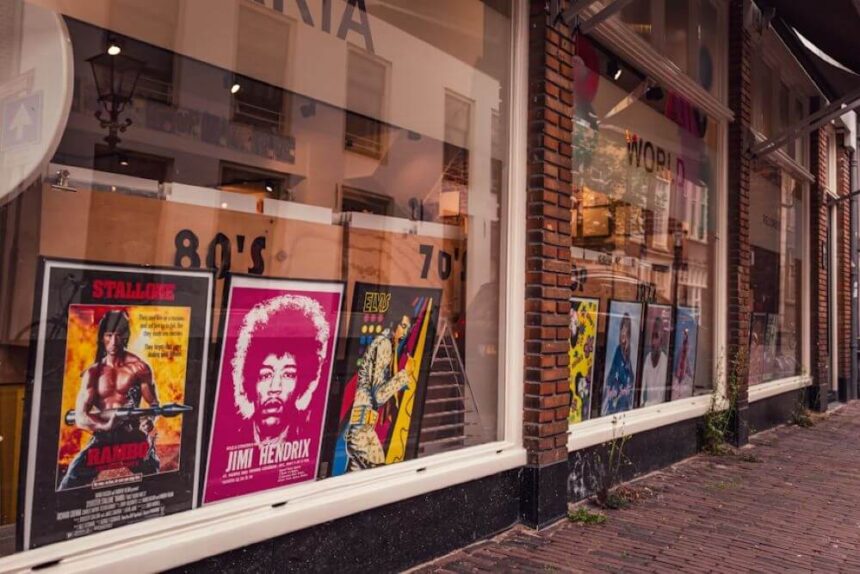






Walk through any busy commercial district and a pattern becomes clear almost immediately. One business pulls people in, earns repeat visits, and gets talked about. The one next door, offering a comparable product at a similar price, barely registers. The difference is rarely luck. It almost always comes down to branding.
What Branding Actually Means
Most people reduce branding to a logo and a color scheme. That framing misses the point. A brand is the full impression a business makes at every point of contact: the sign above the door, the tone of an email, the way a staff member answers the phone, the look of a package when it arrives. All of it adds up to a feeling, and that feeling is what people remember and share.
Branding is so much more than a few colors, nice fonts, and a fancy logo. It is about managing brand perception across every customer touchpoint. That definition matters because it shifts the conversation away from aesthetics and toward strategy. A business that treats branding as decoration will always be outpaced by one that treats it as communication.
The Lucidpress State of Brand Consistency Report found that consistent branding can increase revenue by as much as 33%. That figure is not a minor edge. For a growing business, it is the difference between staying flat and scaling meaningfully, without increasing ad spend or overhauling the product.
The Gap Between Having a Brand and Living It
This is where many businesses fall short. They invest in a logo, build a website, and consider the brand “done”. Then the social media posts go out in a different tone, the printed materials use a slightly different shade of blue, and the in-store experience feels disconnected from everything online. Customers pick up on that dissonance, even when they cannot name it.
Visual Consistency
Color, typography, and imagery need to behave the same way across every format. A customer who sees a polished Instagram presence and then walks into a store with outdated signage experiences a quiet form of confusion. That confusion erodes trust. And trust is the foundation of repeat business.
Tone and Voice
The words a business uses matter as much as the visuals. A brand that sounds warm and personal on its website but sends cold, transactional emails has a tone problem. Customers form expectations based on early interactions, and when later ones contradict those expectations, the relationship weakens.
The Internal Side of Branding
Branding is not just an external exercise. Employees who understand what a brand stands for, and why it looks and sounds the way it does, become natural ambassadors. Those who do not will produce off-brand content, give inconsistent answers, and undermine work being done elsewhere. Despite 95% of organizations having brand guidelines, only 30% use them regularly. That gap is where brand equity quietly leaks away.



Why Visibility Requires Repetition
Recognition does not happen after a single impression. It takes an average of five to seven brand interactions for consumers to recall a brand. The practical implication is straightforward: a business needs to show up consistently, across multiple channels, before it earns a place in a customer’s memory. Businesses that go quiet for stretches, rebrand too often, or show up differently on different platforms reset that clock every time.
The ones that get noticed commit to showing up the same way, repeatedly, over time. They do not chase every new design trend or shift their messaging every quarter. They pick a lane and stay in it long enough for people to recognize them. Simple as that.
Wearable Merch: Branding That Walks Out the Door
One of the most underused tools in a brand’s toolkit is apparel and wearable merchandise. Custom branded shirts are often the cornerstone of these efforts, alongside hats, jackets, and tote bags. These items do something that digital advertising cannot: they turn customers and employees into walking impressions.
66% of consumers say they can name the brand on a logoed product they have received in the past 12 months. That kind of recall, sustained over months of real-world use, is difficult to achieve with a banner ad that disappears in three seconds. A well-designed hat worn to a weekend market reaches dozens of people who were never part of a targeted campaign.
Apparel as a Brand Signal
The quality of branded apparel sends a message about the brand itself. A flimsy shirt with a faded print communicates something very different from a well-made piece with a clean, thoughtful design.
Merch for Employees
Staff wearing branded gear creates immediate visual cohesion, whether at a trade show, a job site, or a community event. It signals professionalism and makes the team identifiable without any additional effort. For service businesses especially, uniformity in appearance builds the kind of first impression that years of advertising would struggle to manufacture otherwise.
Merch for Customers
Giving branded merchandise to customers is a form of brand extension. The item travels with them, gets seen by others, and keeps the business name visible long after the transaction is complete. Wearables are the top product category in promotional merchandise, and 91% of consumers who receive a branded piece of clothing say they would wear it. That retention rate makes apparel one of the more cost-efficient awareness tools available to a business of any size.
Digital Presence in Brand Visibility
A strong brand needs a digital home that reflects it accurately. The website, the social profiles, the Google Business listing, the email footer: all of it contributes to whether a business looks credible and established or cobbled together. Customers who cannot find clear, consistent information about a business online often move on to one they can.
Search visibility and brand visibility are connected but not the same thing. A business can rank well for a keyword and still lose the customer if the landing page looks inconsistent with the ad that brought them there. Conversion depends on trust, and trust is built through coherence. Every element of the digital experience should feel like it comes from the same place, with the same values, the same voice, and the same visual identity.
Where to Start
Most businesses do not need a complete overhaul. They need an honest audit of where their brand breaks down. Pick three customer touchpoints and evaluate them side by side. Does the tone match the visuals? Does the website reflect the in-person experience? Does the branded merchandise look like it belongs to the same company as the social media presence?
The gaps that surface are the starting points. Fix them one at a time, and you build the kind of consistent, recognizable presence that turns a business from one that exists into one that gets noticed.