




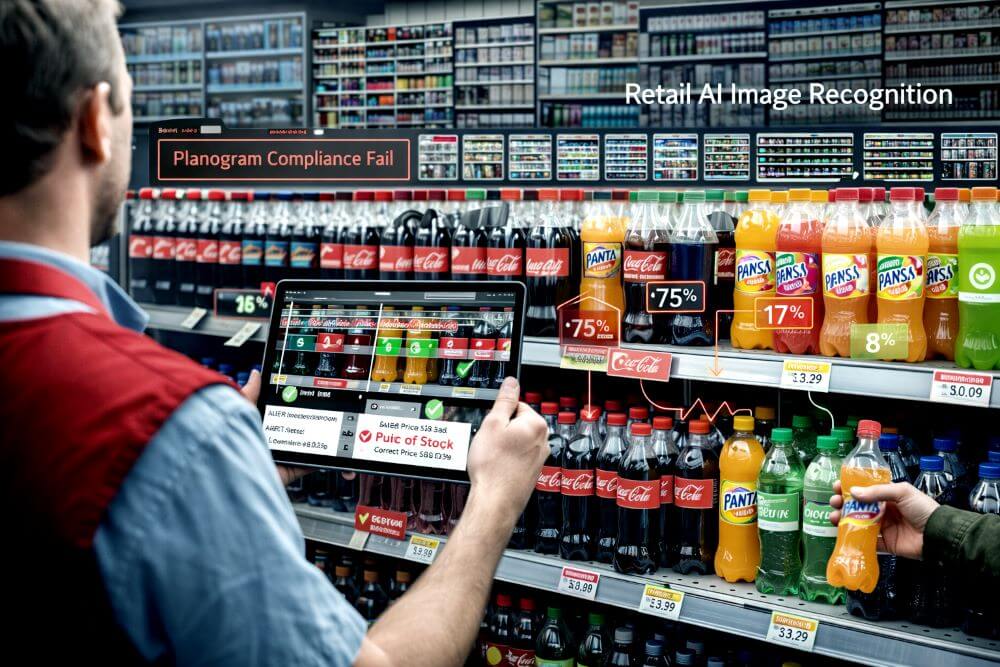

Physical retail still decides a huge share of FMCG purchases, so the last few feet of the shelf matter more than most boardroom decks admit. A strong Perfect Store program starts with seeing what is really happening in front of the shopper, and image recognition retail execution gives brands that visibility at the shelf level. At the same time, image recognition in retail is changing how brands score availability, visibility, and pricing without waiting for a rep to finish a manual checklist.
The Perfect Store is not a single outlet or a branded showcase. It is a discipline. The idea is simple: the right product should be in the right place, at the right price, with the right visibility, every time a shopper reaches the shelf. The hard part is proving whether that standard is actually being met. Manual audits are still common, but they are slow, subjective, and easy to distort. Trax reported that 44% of surveyed CPG companies still relied on manual observational audits, while only 17% were using image recognition technology to monitor shelf conditions. That gap explains why execution often looks much cleaner in a spreadsheet than it does in the aisle.
The Pillars Of Retail Excellence And The Execution Gap
Perfect Store scoring usually rests on a few basic pillars: availability, visibility, share of shelf, facings, pricing, and promotional execution. None of that sounds controversial. Yet the real problem appears when the neat planogram approved at headquarters collides with shelf reality. Products get moved, tags go missing, displays are never installed, and gaps stay unresolved for days.
That difference between the planned shelf and the live shelf is the execution gap. And it is expensive. NielsenIQ found that empty shelves cost U.S. retailers more than $82 billion in missed sales in 2021. The same source showed that when shoppers face out-of-stocks, 30% will visit a new store and 70% will buy a different brand. Manual counting cannot keep up with that kind of risk. By the time a rep finishes an audit, the store may already have lost the sale.
Pillar 1: Automated Planogram Compliance And Facings
Planogram compliance used to depend on human memory, handwritten notes, and a lot of goodwill. That is no longer enough. With AI shelf analysis, a rep can capture a shelf photo and compare the live display against the approved planogram within minutes. The result is clearer, faster, and much harder to argue with.
Facings matter because shoppers buy what they can see. If a brand paid for six facings and only got three, the problem is not cosmetic. It affects findability, perceived dominance, and often sell-through. AI can also spot ghost inventory, misplaced packs, and empty slots hidden behind bad store data. Instead of vague impressions, the team gets a binary view of compliance: pass, fail, or fix now. That creates one version of the truth for both the brand and the retailer.
Pillar 2: Measuring Share Of Shelf And Category Dominance
A shelf is never neutral. It is a visual contest, and brands that lose space usually lose momentum soon after. That is why AI shelf recognition has become so useful for category teams. It does not just count your own packs. It identifies competitor SKUs, product sizes, adjacencies, and the exact portion of shelf space each brand occupies.
This matters in negotiations as much as in execution. When a sales team can show that a competitor is taking more linear space than agreed, the conversation changes. It moves from opinion to evidence. And in stores with thousands of SKUs, evidence matters. Trax notes that a typical grocery store can carry more than 30,000 SKUs, with roughly 30% of those changing during the year due to new launches or packaging updates. In that environment, manual monitoring breaks down fast. AI does not get tired, and it does not guess.



Pillar 3: Real-Time Pricing And Promotional Accuracy
Pricing and promotion compliance often fail in quiet ways. A sign is missing. A shelf tag shows the old price. A display never leaves the back room. The brand still pays for the promotion, but the shopper never sees the offer as it was planned. That is where retail image recognition technology earns its place. It scans shelf tags, talkers, and display elements and shows whether the agreed execution is actually live.
This is not only about margin protection. It is also about trust. If the tag says one thing and the register says another, shoppers remember the friction more than the discount. Real-time alerts help teams fix the problem while the event is still running, rather than discovering the failure in a report weeks later. That shift, from delayed diagnosis to immediate correction, is one of the clearest commercial wins of AI-led retail execution.
Pillar 4: Eliminating Out-Of-Stocks And Phantom Inventory
Out-of-stocks are rarely just inventory problems. They are behavior problems, too. When shoppers do not find the item they came for, many do not wait. NielsenIQ has shown how quickly shoppers switch stores or brands when shelves are empty, which is why phantom inventory is so dangerous. The system says stock exists, but the shelf is bare, and the sale is already gone.
Retail AI image recognition closes that blind spot by reading the shelf directly rather than trusting shipment files or back-end assumptions. It detects empty facings, missing labels, and suspicious gaps that deserve a replenishment alert. NIQ has also shown how targeted visibility can reduce losses: in one case study, a beer manufacturer cut weekly missed sales tied to availability issues by 45% after using more granular on-shelf data. Even modest gains matter here. A 2% to 5% sales uplift from better availability can mean millions over a year in a large chain.
Transforming Data Into Actionable Retail Insights With Image Recognition In Retail
Collecting more shelf photos is not the real goal. Better decisions are. The best Perfect Store programs turn raw images into store scores, exception alerts, and coaching priorities that managers can act on the same day. The practical value is speed with context. It changes data from a static audit record into a working system for prioritization.
This also changes the role of the field team. Reps spend less time counting bottles and more time solving specific problems: fix this out-of-stock, challenge that misplaced competitor item, confirm that display, correct that tag. Trax reported that Henkel reduced data collection and merchandising execution time by 50%, gained 150% more time for active selling, and saw a 2% uplift in revenue within 3.5 months after deploying its shelf solution. That is why image recognition for retailers is becoming a management tool rather than just a reporting feature.
Strategic Benefits Of The AI-Driven Framework
An AI-led Perfect Store framework works best when it is tied to operational habits, not just software deployment. Brands need better images, yes, but they also need better routines for escalation, coaching, retailer collaboration, and post-visit follow-up. The strongest programs build a strong evidence trail over time, so teams can spot recurring gaps, prove compliance trends, and compare regions without relying on memory.
A practical way to look at the upside is through five benefits that show up again and again when shelf data becomes fast, visual, and objective:
- Increased speed of retail audits, allowing field teams to cover 30% more stores in the same amount of time.
- Objective, non-biased reporting that eliminates disputes between brand managers and retail store owners regarding compliance.
- Enhanced visibility into competitor tactics, price changes, and new product launches across the entire retail landscape.
- Improved Return on Investment (ROI) for trade spend by ensuring that promotional displays are actually executed on time.
- Strategic alignment across Sales, Marketing, and Supply Chain departments through a unified dashboard of shelf performance metrics.
Taken together, those gains do more than tidy up reporting. They create a shared operating language. Once teams can see the same shelf reality, they stop debating the diagnosis and move faster on the fix.
Conclusion
The Perfect Store used to sound like an aspiration. In practice, it was often a patchwork of manual checks, delayed reports, and educated guesses. That is changing. AI has made planogram compliance, shelf share, promotional accuracy, and out-of-stock detection measurable at a level that field teams and executives can both trust.
The commercial case is straightforward. Empty shelves cost money. Poor facings weaken visibility. Missing tags damage shopper confidence. And slow audits delay action until the window to fix the problem has already closed. Brands that move to automated shelf monitoring are not chasing novelty. They are reducing friction at the exact moment purchase decisions are made.
Physical retail is still won in small moments, often in the final seconds before the basket decision. The brands that treat execution as a live data problem, not an occasional audit exercise, will keep pulling ahead. That is the long-term promise of image recognition in retail.